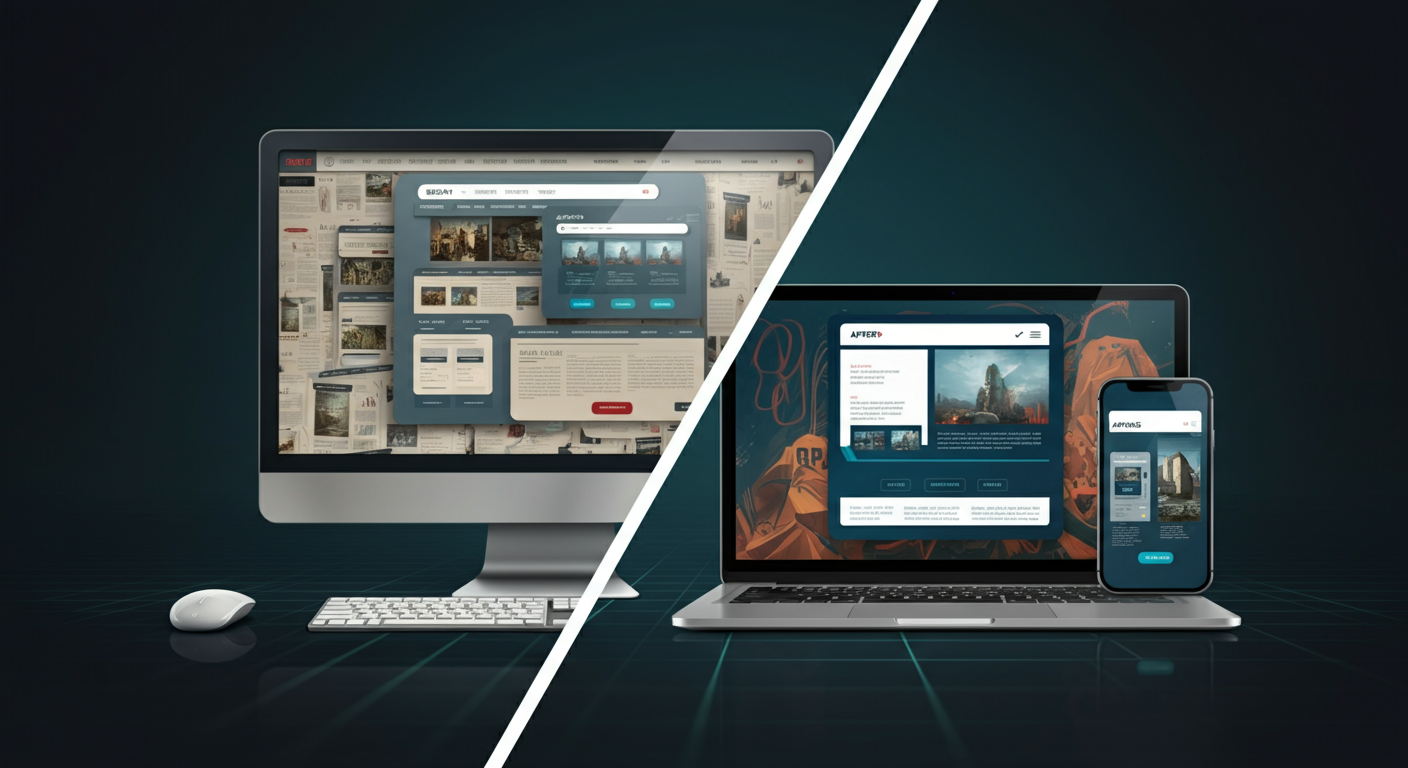

Are you running an SME in Cameroon or sub-Saharan Africa and wondering: should I invest in a web application or a classic website? This strategic decision directly impacts your budget, your time-to-market, and your ability to serve your customers. In this comprehensive guide, we give you all the keys to choosing the digital solution best suited to your context.
Definitions: Website vs Web Application
Before comparing the two solutions, it is essential to understand what fundamentally distinguishes them.
What is a website?
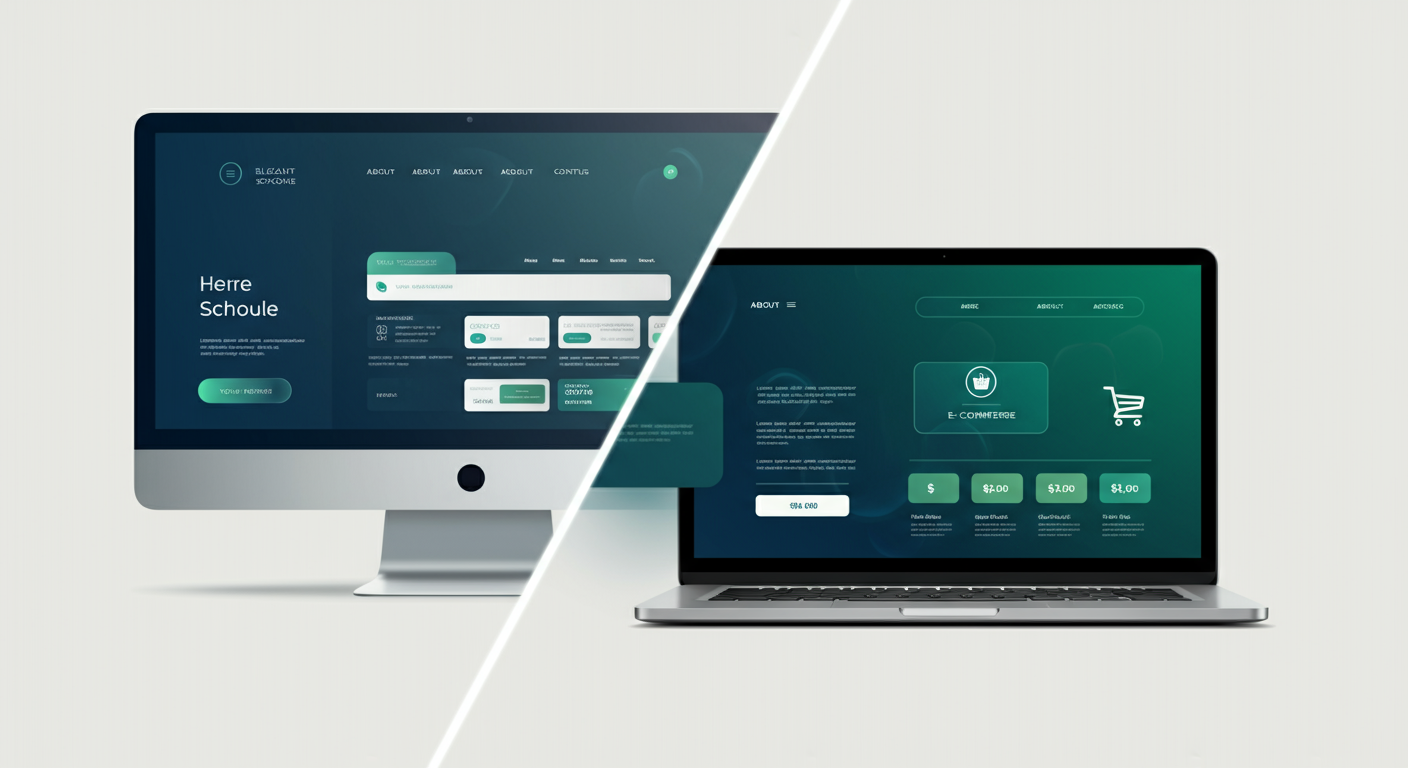
A website is a set of pages accessible via a web browser, primarily designed to present information. It can be a showcase site, a blog, a portfolio, or a basic e-commerce site. The content is generally static or semi-dynamic, and user interaction is limited to browsing and reading.
What is a web application?
A web application is software accessible via a browser that allows users to perform complex actions: create an account, place an order, manage inventory, generate reports, collaborate in real time. It involves advanced business logic, a dynamic database, and often user authentication.
Comparison Table: Website vs Web Application
Here are the essential criteria for comparing the two solutions in the context of African SMEs:
- Functional complexity: Website = low to medium / Web app = high
- Development cost: Website = XAF 150,000–800,000 / Web app = XAF 500,000–5,000,000+
- Delivery time: Website = 1 to 4 weeks / Web app = 2 to 6 months
- Maintenance: Website = light / Web app = regular and technical
- Natural SEO: Website = excellent / Web app = requires a dedicated strategy
- User interaction: Website = passive / Web app = active and transactional
When to Choose a Website for Your African SME?
A website is the ideal solution in several common situations for African businesses. Here are the use cases where it excels:
1. You are starting your business
For an SME launching in Douala, Yaoundé, or Abidjan, a professional showcase website is the essential first step. It allows you to establish your online credibility, be found on Google, and present your services at a lower cost. A well-ranked site can generate qualified leads within the first few weeks.
2. Your main goal is visibility
If your priority is to appear in Google search results when potential customers look for your services, an SEO-optimized website is your best ally. Web applications are structurally less favorable for organic search, as their content is often dynamically generated and difficult to index.
3. Limited budget and short timeline
With a budget of XAF 200,000 to 500,000 and a need for quick launch, a professional website is achievable in 2 to 3 weeks. It is the most accessible solution for African micro and small businesses looking to digitize their presence without mobilizing significant resources.
4. Sectors suited to websites
- Medical practices, lawyers, notaries (showcase site + simple appointment booking)
- Restaurants, hotels, travel agencies (presentation + basic booking)
- Craftspeople, service providers (portfolio + contact form)
- NGOs and associations (institutional communication + donation collection)
When to Choose a Web Application for Your African SME?
A web application becomes necessary when your business involves complex processes you want to automate or digitize. Here are the signals that indicate it is time to invest in a web application:
1. You manage complex user data
If your business requires managing customer accounts, order histories, personalized profiles, or analytical dashboards, a web application is essential. For example, a microfinance platform in Cameroon managing loan files, repayments, and automatic notifications needs a true web application.
2. Your business model is transactional
Marketplaces, SaaS platforms, advanced booking systems, or online payment solutions require a robust application architecture. If your revenue depends on recurring digital transactions, the web application is your core infrastructure.
3. You want to automate internal processes
Inventory management, automatic invoicing, delivery tracking, HR management: if you want to replace manual processes or Excel files with a centralized, online-accessible system, a custom web application is the right answer.
4. Sectors suited to web applications
- Fintech and microfinance (portfolio management, loans, Mobile Money)
- Advanced e-commerce (multi-vendor marketplace, inventory management)
- Logistics and transport (real-time tracking, automatic dispatch)
- Digital health (patient records, teleconsultation, online pharmacies)
- EdTech (online learning platforms, school management)
Real Costs in Cameroon: What to Budget
One of the decisive factors for African SMEs is the available budget. Here is a realistic estimate of costs on the Cameroonian and West African market in 2027:
Professional website budget
- 5-page showcase site: XAF 150,000–350,000
- Premium showcase site with SEO blog: XAF 350,000–700,000
- Basic e-commerce site (WooCommerce): XAF 500,000–1,200,000
- Annual maintenance: XAF 60,000–180,000/year
Custom web application budget
- Simple web application (MVP): XAF 500,000–1,500,000
- Intermediate web application: XAF 1,500,000–4,000,000
- Complex web application (marketplace, SaaS): XAF 4,000,000–15,000,000+
- Monthly maintenance: XAF 50,000–300,000/month
Concrete Use Cases in Cameroon
To illustrate the difference concretely, here are real examples of Cameroonian SMEs and their technology choices:
Case 1: Accounting firm in Douala → Website
An accounting firm wanted to attract new SME clients. The solution: a showcase website with an SEO blog targeting keywords like 'chartered accountant Douala' or 'tax filing Cameroon'. Result: +40% in quote requests within 6 months thanks to organic search.
Case 2: Real estate agency in Yaoundé → Web application
A real estate agency managing over 200 properties needed a system to manage listings, visits, and contracts. A custom web application automated listing publication, appointment scheduling, and PDF contract generation, reducing administrative time by 60%.
Case 3: Fashion boutique in Bafoussam → E-commerce site
A fashion designer wanted to sell her collections online with Mobile Money payment. A WooCommerce e-commerce site integrating Orange Money and MTN MoMo was developed in 3 weeks for XAF 650,000. Online sales now represent 35% of revenue.
The Hybrid Solution: Start with a Website, Evolve to an Application
For many African SMEs, the best strategy is progressive. Start with a professional website to establish your online presence and generate your first customers. Once your business model is validated and your revenue stabilized, invest in a web application to automate and scale your activity.
This two-step approach allows you to control your budget, test your market, and avoid costly mistakes related to premature development of a complex application.
Decision Checklist: Website or Web Application?
Answer these questions to guide your choice:
- Do users need to create an account and log in? → Yes = Web application
- Does your content change based on the logged-in user? → Yes = Web application
- Is your priority to be found on Google? → Yes = Website
- Do you need to process recurring payments or subscriptions? → Yes = Web application
- Is your budget under XAF 500,000? → Yes = Website
- Do you want to automate internal processes (inventory, HR, invoicing)? → Yes = Web application
Why Choose BEONWEB for Your Digital Project in Africa?
At BEONWEB, we have been supporting African SMEs in their digital transformation for several years. Our expertise covers both the creation of high-performance, SEO-optimized websites and the development of custom web applications adapted to African market realities: variable connectivity, Mobile Money payments, multilingual interfaces.
We offer a free digital audit to help you identify the solution best suited to your business, budget, and growth objectives. Contact us today to start your project.
Editorial desk & expertise
Our team combines SEO strategists, web developers, designers and digital marketers — all working daily on real client projects across Cameroon and Francophone Africa.