E-commerce in Africa is experiencing unprecedented growth. In 2026, the continent has more than 600 million internet users, a rapidly expanding middle class, and massive mobile adoption. Yet launching an online store in Africa remains a challenge for many entrepreneurs: which platforms should you choose? How do you accept Mobile Money payments? How do you manage logistics in countries where postal addressing is still limited?
This comprehensive guide walks you step by step through creating your online store in Africa. Whether you are in Cameroon, Côte d'Ivoire, Senegal, or elsewhere on the continent, you will find all the concrete answers here to launch, optimize, and grow your e-commerce business in 2026.
1. The State of E-Commerce in Africa in 2026
A Market in Full Explosion
The African e-commerce market exceeds $75 billion in 2026, with an average annual growth rate of 17%. This momentum is driven by several structural factors:
- Mobile penetration: more than 80% of online purchases in sub-Saharan Africa are made from a smartphone.
- The rise of Mobile Money: M-Pesa, Orange Money, MTN MoMo, and Wave have banked millions of previously unbanked consumers.
- A young population: 60% of Africans are under 25, a generation that is native to the digital world.
- Accelerated urbanization: major metropolises such as Abidjan, Dakar, and Douala are concentrating growing demand for online shopping.
Key Markets: Cameroon, Côte d'Ivoire, Senegal
Cameroon is one of the most dynamic e-commerce markets in Central Africa. With a population of 28 million and an internet penetration rate of 45%, the country is seeing the emergence of many online stores in the fashion, electronics, and food sectors. Douala and Yaoundé account for the bulk of transactions.
Côte d'Ivoire is the e-commerce hub of West Africa. Abidjan, the economic capital, is home to major players such as Jumia CI and many independent stores. The country benefits from a more developed banking infrastructure and strong adoption of Orange Money.
Senegal stands out for the massive adoption of Wave, the mobile payment solution that has revolutionized financial transactions in the country. Dakar is a very active startup ecosystem, with government initiatives favorable to digital commerce.
Specific Challenges of the African Market
Despite this growth, e-commerce in Africa faces real obstacles: consumer trust in online shopping still needs to be built, last-mile logistics are complex, and internet connections can be unstable in some areas. These challenges are also opportunities for entrepreneurs who know how to address them.
2. Choosing the Right E-Commerce Platform for Africa
The choice of platform is one of the most important decisions for your online store. In Africa, this choice must take into account specific constraints: compatibility with local payment solutions, performance on slow connections, total cost of ownership, and the availability of local developers.
WooCommerce: Open-Source Flexibility
WooCommerce is the e-commerce plugin for WordPress, and by far the most widely used solution in Africa. Its popularity is explained by several major advantages:
- Free and open source: no monthly subscription, you only pay for hosting.
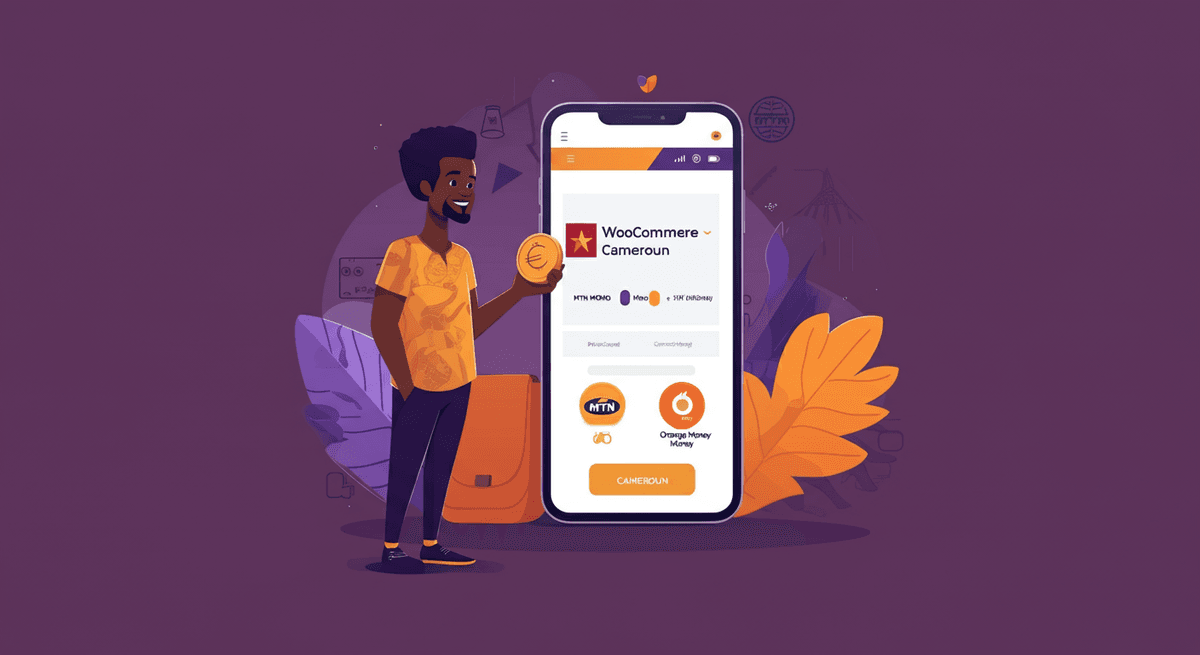
- Local integrations: plugins such as CinetPay, Monetbil, or PayDunya allow you to accept Mobile Money directly.
- Local community: many WordPress/WooCommerce developers are available in Cameroon, Côte d'Ivoire, and Senegal.
- Total customization: you have full control over your store, your data, and your user experience.
The main drawback of WooCommerce is the need to manage hosting, updates, and security yourself. For non-technical entrepreneurs, this can be a barrier.
Shopify: The All-in-One Solution
Shopify is a SaaS (Software as a Service) platform that handles hosting, security, and updates for you. It is particularly well suited to entrepreneurs who want to focus on their business rather than on technical matters.
- Ease of use: a functional store can be created in just a few hours.
- Performance and reliability: Shopify guarantees 99.99% uptime and optimized loading times.
- African integrations: via third-party apps such as Flutterwave or Paystack, Shopify accepts Mobile Money payments.
- Cost: starting from $29/month, which can represent a significant investment for small African businesses.
For a detailed comparison between these two platforms, see our article WooCommerce vs Shopify in Africa.
Local African Solutions
E-commerce platforms designed specifically for the African market are emerging and deserve your attention:
- Jumia: the largest African marketplace, present in 11 countries. Ideal for testing the market without creating your own store.
- Afrimarket: specializing in money transfers and goods purchases for the diaspora.
- Anka (formerly Afrikrea): a marketplace dedicated to African creators and artisans, with a strong presence in Côte d'Ivoire.
- Expat-Dakar and Coin Afrique: classified ad platforms very popular in Senegal and West Africa.
Our recommendation: start with your own WooCommerce or Shopify store to control your brand and margins, and use marketplaces as a complementary distribution channel.
3. Online Payment Solutions in Africa
Payment is the lifeblood of African e-commerce. The good news: the online payment ecosystem has grown considerably in recent years. Here is a comprehensive overview of the available solutions.
Mobile Money: The King of Payments in Africa
Mobile Money is the dominant payment method in sub-Saharan Africa. Unlike bank cards, it does not require a traditional bank account — only a mobile phone. In 2026, more than 300 million Africans regularly use Mobile Money.
Orange Money
Orange Money is Orange's mobile payment solution, present in 17 African countries. It is particularly dominant in Côte d'Ivoire, Senegal, Cameroon, Mali, and Burkina Faso. To integrate Orange Money into your online store, you can go through aggregators such as CinetPay, Monetbil, or PayDunya, which offer a unified API.
MTN Mobile Money (MoMo)
MTN MoMo is the Mobile Money service of MTN Group, a leader in East and Central Africa. In Cameroon, MTN MoMo is one of the two dominant solutions alongside Orange Money. MTN offers a direct API (MTN MoMo API) as well as integrations via aggregators. The service is available in Cameroon, Côte d'Ivoire, Ghana, Uganda, Zambia, and many other countries.
Wave
Wave is an American-African fintech that has revolutionized mobile payments in Senegal and Côte d'Ivoire with near-zero fees (1% maximum). In 2026, Wave has become the most widely used mobile payment service in Senegal, surpassing Orange Money in transaction volume. Wave offers a merchant API for e-commerce businesses.
Payment Aggregators: The Recommended Solution
Rather than integrating each payment solution separately, aggregators allow you to accept multiple methods through a single API. Here are the main ones:
- CinetPay: leader in Africa, covering Orange Money, MTN MoMo, Wave, Moov Money, and bank cards. Available in Cameroon, Côte d'Ivoire, Senegal, Mali, and Burkina Faso.
- Monetbil: a very popular Cameroonian solution, specializing in Mobile Money integration for WooCommerce and other CMS platforms.
- PayDunya: a Senegalese aggregator covering West Africa, with a simple API and documentation in French.
- Flutterwave: a pan-African player covering more than 30 countries, ideal for stores targeting multiple markets.
- Paystack: very popular in Nigeria and Ghana, expanding into Africa.
For an in-depth analysis of the payment solutions available in Cameroon, see our guide Online Payment in Cameroon.
Bank Cards
Although less widespread than Mobile Money, bank cards (Visa, Mastercard) remain important for reaching banked customers and the African diaspora. The aggregators mentioned above all accept bank cards in addition to Mobile Money. Also consider offering cash on delivery, which remains very popular in Africa and can significantly increase your conversion rate.
Discover how to integrate Mobile Money into your e-commerce store in our dedicated article: Mobile Money and E-Commerce in Africa.
4. Logistics and Delivery in Africa
Logistics is often cited as the main challenge of e-commerce in Africa. The lack of standardized postal addressing, variable road infrastructure, and the high cost of last-mile delivery complicate shipping. Here is how to navigate these challenges.
Delivery Players in Africa
- Jumia Logistics: a pan-African delivery network, accessible even to independent stores via JumiaPay Logistics.
- DHL Express Africa: reliable for international and inter-African deliveries, but costly for local B2C.
- Sendbox (Nigeria/Ghana): a logistics startup that aggregates multiple carriers to offer the best rates.
- Yango Delivery (Cameroon, Côte d'Ivoire): a fast urban delivery service, very popular in Douala, Yaoundé, and Abidjan.
- Glovo and Uber Eats: for food products and express deliveries in major cities.
Logistics Strategies Adapted to Africa
Faced with logistical challenges, several strategies have proven effective:
- Click-and-collect: offer pickup points in strategic locations (partner stores, gas stations, supermarkets). This reduces delivery costs and increases customer trust.
- WhatsApp delivery coordination: coordinate deliveries via WhatsApp Business for direct and personalized communication with your customers.
- Shared delivery points: pool costs with other e-commerce businesses in your neighborhood or city.
- Neighborhood geo-fencing: instead of precise addresses, use well-known geographic landmarks (intersections, markets, iconic buildings).
5. Legal Aspects of E-Commerce in Africa
Launching an online store in Africa requires complying with a legal framework that varies by country. Here are the key points to know.
Business Registration
In most African countries, you must register your commercial activity before selling online. In Cameroon, this is done through the Centre de Formalités de Création d'Entreprises (CFCE). In Côte d'Ivoire, the Centre de Promotion des Investissements (CEPICI) offers a one-stop shop. In Senegal, the APIX facilitates business creation procedures.
E-Commerce Regulation
ECOWAS (Economic Community of West African States) and CEMAC (Economic and Monetary Community of Central Africa) have adopted directives on e-commerce. At the national level, specific laws govern online transactions:
- Cameroon: Law No. 2010/021 of 21 December 2010 governing electronic commerce.
- Côte d'Ivoire: Law No. 2013-546 on electronic transactions.
- Senegal: Law No. 2008-08 on electronic transactions.
Personal Data Protection
Personal data protection is a growing concern. Senegal has the Commission de Protection des Données Personnelles (CDP), Côte d'Ivoire has the ARTCI, and Cameroon has the Agence Nationale des Technologies de l'Information et de la Communication (ANTIC). Your online store must have a clear privacy policy and comply with data collection and processing rules.
Taxation and VAT
VAT applies to online sales in most African countries. In Cameroon, the standard rate is 19.25%. In Côte d'Ivoire, it is 18%. In Senegal, it is 18%. Make sure to register with the tax authorities and issue compliant invoices.
6. Optimizing Your E-Commerce for the African Market
Creating an online store is one thing; making it perform well on the African market is another. Here are the essential optimizations.
Performance and Speed: Optimizing for Slow Connections
In Africa, a large proportion of users browse on 3G connections or unstable mobile networks. Your store must be ultra-fast:
- Choose a hosting provider with servers in Africa or close to the continent (OVH Roubaix, AWS Cape Town, Google Cloud Johannesburg).
- Compress all your images (WebP format, size < 100 KB).
- Enable a CDN (Content Delivery Network) to distribute your content from servers close to your customers.
- Aim for a Google PageSpeed score above 80 on mobile.
Mobile-First: Designing for the Smartphone
More than 80% of your visitors will arrive on mobile. Your store must be designed mobile-first, not just responsive. This means: buttons large enough to tap with a thumb, a simplified checkout process in a maximum of 3 steps, and a display optimized for small screens.
Local SEO: Being Visible on Google in Africa
Organic search (SEO) is your best long-term investment. For the African market:
- Target local keywords: "online store Cameroon", "buy online Abidjan", "delivery Dakar".
- Create a Google Business Profile listing for your store.
- Publish regular blog content on topics related to your industry and local market.
- Earn backlinks from recognized local sites (media outlets, professional associations, directories).
WhatsApp Business: Your Number-One Sales Channel
WhatsApp is the most widely used app in Africa. Integrate WhatsApp Business into your store to:
- Answer customer questions in real time.
- Send order confirmations and delivery updates.
- Share product catalogs directly in conversations.
- Create loyal customer groups for exclusive offers.
Building Consumer Trust
Trust is the main barrier to online shopping in Africa. To build it:
- Clearly display your contact details (physical address, phone number, email).
- Publish authentic customer reviews with photos.
- Offer a clear and generous return policy.
- Secure your site with an SSL certificate (HTTPS) and display security badges.
7. Success Stories: African E-Commerce Entrepreneurs Who Are Thriving
African e-commerce is not just a promise: local entrepreneurs have already built flourishing businesses. Here are some inspiring success stories.
Cameroon: Ndolo Shop, Local Fashion Online
Launched in Douala in 2021, Ndolo Shop has become one of the most popular African fashion online stores in Cameroon. By leveraging WooCommerce, MTN MoMo and Orange Money integration via Monetbil, and an aggressive Instagram strategy, the founder reached 500 orders per month in less than two years. Her key to success: high-quality product photos, 24-hour delivery in Douala and Yaoundé, and responsive customer service on WhatsApp.
Côte d'Ivoire: FreshMarket CI, the Online Grocery Store
FreshMarket CI has revolutionized fresh produce delivery in Abidjan. By relying on Shopify for the store, CinetPay for payments (Orange Money, Wave, bank cards), and Yango Delivery for logistics, the company delivers baskets of fruits, vegetables, and local products in under 3 hours. The model has won over the Abidjan middle class and the expatriate community.
Senegal: Teranga Tech, Refurbished Electronics
Teranga Tech sells refurbished smartphones and computers in Dakar via a WooCommerce store. By accepting Wave as the primary payment method (accounting for 70% of its transactions), the company has captured a market of young Senegalese professionals looking for quality devices at affordable prices. The founder also developed a trade-in program for old devices, creating a virtuous cycle.
8. Action Plan: Launch Your Online Store in Africa in 30 Days
Here is a concrete action plan to launch your online store in one month:
- Week 1 — Foundations: Choose your niche and validate demand. Register your business. Purchase your domain name (.cm, .ci, .sn, or .com). Choose your platform (WooCommerce recommended for tight budgets).
- Week 2 — Build: Install and configure your store. Add your first 10 to 20 products with quality photos. Integrate your payment solution (CinetPay or Monetbil). Set up WhatsApp Business.
- Week 3 — Logistics and Legal: Negotiate with one or two local delivery providers. Draft your terms and conditions, return policy, and privacy policy. Test the order process end to end.
- Week 4 — Launch and Marketing: Launch on social media (Instagram, Facebook, TikTok). Contact 5 local micro-influencers for partnerships. Launch a launch offer (free delivery, discount). Collect your first customer reviews.
Conclusion: Africa, the Next Eldorado of Global E-Commerce
E-commerce in Africa is no longer a distant promise: it is a reality under full construction. Entrepreneurs who launch today have the first-mover advantage in markets that are still far from saturated. The tools exist, the payment solutions are in place, and African consumers are ready to shop online — provided you offer them a trustworthy, fast experience adapted to their habits.
Whether you are in Cameroon, Côte d'Ivoire, Senegal, or elsewhere on the continent, the keys to success are the same: choose the right platform, integrate Mobile Money, master local logistics, and build your customers' trust. BEONWEB is with you at every step of this journey.
Editorial desk & expertise
Our team combines SEO strategists, web developers, designers and digital marketers — all working daily on real client projects across Cameroon and Francophone Africa.