In 2026, French-speaking Africa is one of the fastest-growing regions in the world for digital marketing. With more than 400 million inhabitants, a hyper-connected young population, and a mobile penetration rate now exceeding 80% in major cities, the markets of Cameroon, Côte d'Ivoire, Senegal, Gabon, and Togo offer considerable opportunities for businesses that know how to adapt their digital strategy to local realities.
Yet too many African businesses — and too many international agencies — make the mistake of importing strategies designed for Europe or North America without adapting them. The result: wasted budgets, campaigns that don't resonate, and missed opportunities. This pillar guide gives you a complete, actionable vision tailored to the African context.
1. The State of Digital Marketing in French-Speaking Africa in 2026
A Market in Full Acceleration
French-speaking sub-Saharan Africa has undergone a spectacular digital transformation between 2020 and 2026. Several structural factors explain this dynamic:
- The explosion of the smartphone as the first — and often only — point of access to the Internet
- The democratization of low-cost data plans (less than 5,000 FCFA/month in most countries)
- The rise of mobile money (Orange Money, MTN MoMo, Wave) facilitating online transactions
- A young population (median age under 20) that is natively digital
- The rise of local entrepreneurs looking to digitize their business
Key Figures by Market in 2026
Cameroon: 28 million inhabitants, ~14 million internet users, internet penetration rate ~50%. Douala and Yaoundé concentrate the bulk of B2B and B2C digital activity. The digital advertising market is growing at +22% per year.
Côte d'Ivoire: 27 million inhabitants, ~16 million internet users, penetration rate ~60%. Abidjan is the digital hub of French-speaking West Africa. Strong e-commerce and fintech dynamism.
Senegal: 18 million inhabitants, ~11 million internet users. Dakar is recognized as one of the most advanced African cities in terms of digital startups. Strong entrepreneurial culture.
Gabon: 2.3 million inhabitants, one of the highest internet penetration rates in Central Africa (~65%). Purchasing power above the regional average. A premium market with strong potential.
Togo: 8.5 million inhabitants, a market with strong digital growth. Lomé is positioning itself as a regional financial and digital hub, with fintech-friendly regulation.
2. The Cultural and Behavioral Specificities of African Consumers
Understanding the French-speaking African consumer is the sine qua non of an effective digital strategy. Here are the key behavioral characteristics to integrate into your approach.
Mobile First, Mobile Always
More than 90% of web traffic in French-speaking Africa comes from a smartphone. This means that every digital strategy must be designed mobile-first: fast and lightweight websites, vertical ads, short and visual content. A site that takes more than 3 seconds to load on a 3G connection loses 70% of its visitors.
Trust as a Central Lever
In African markets, trust precedes purchase. The African consumer is wary of unknown brands, online payments, and unfulfilled promises. The most effective trust levers are: customer testimonials (preferably video), visible physical or local presence, recognized certifications and partnerships, and responsiveness on WhatsApp.
The Central Role of Community and Digital Word-of-Mouth
Word-of-mouth remains the number one recommendation channel in Africa, but it has gone digital: WhatsApp groups, Facebook comments, TikTok shares. A brand that generates organic conversation in local communities consistently outperforms brands that rely solely on paid advertising.
Price Sensitivity and Deal Culture
The African consumer is very sensitive to value for money. Promotional offers, bundles, discounts for mobile payment, and loyalty programs work very well. However, you should avoid positioning your brand solely on low price, at the risk of degrading quality perception.
Multilingualism and Local Cultural Codes
While French is the official language, local languages (Wolof in Senegal, Dioula in Côte d'Ivoire, Camfranglais in Cameroon) play an important role in informal and viral communication. Incorporating local expressions into your content creates a sense of closeness and authenticity that boosts engagement.
3. The Most Effective Digital Channels in French-Speaking Africa
SEO: The Most Profitable Long-Term Channel
Search engine optimization (SEO) is often underestimated by African businesses, who prefer short-term paid advertising. This is a major strategic mistake. In 2026, Google accounts for more than 95% of searches in French-speaking Africa. A business well-positioned on its strategic keywords generates a continuous flow of qualified prospects, with no cost per click.
The SEO fundamentals to master for the African market:
- Technical optimization for mobile and loading speed (Core Web Vitals)
- Targeting local keywords (e.g., "marketing agency Douala", "website creation Abidjan")
- Creating quality content in French tailored to local queries
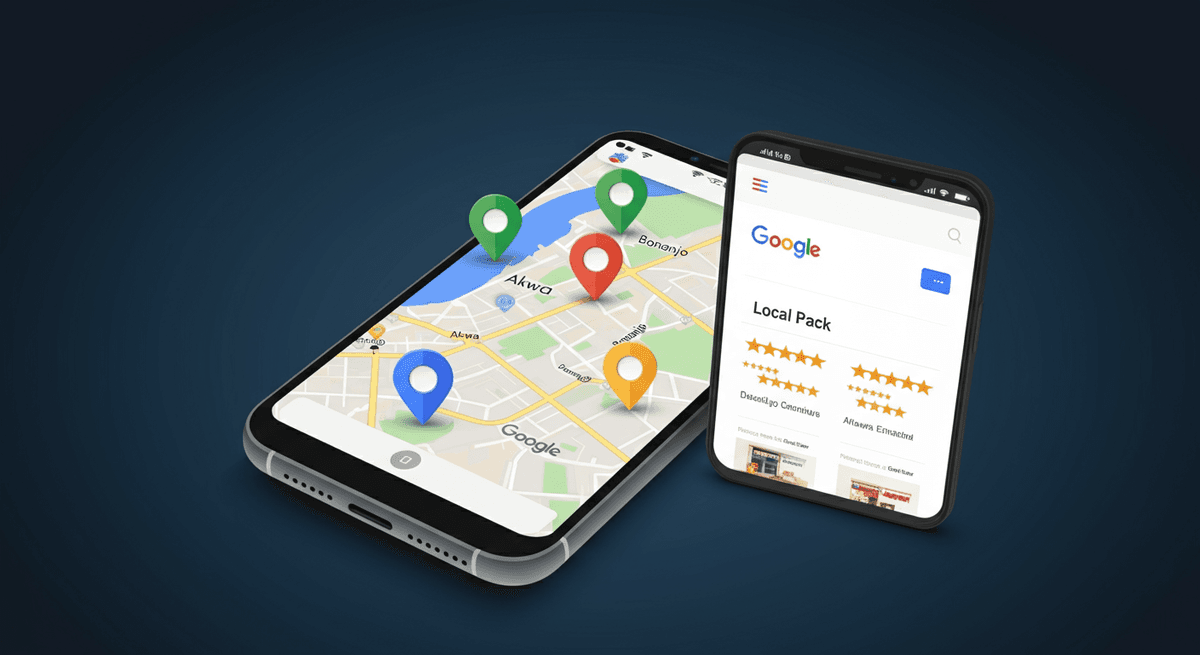
- Optimized Google My Business for local SEO
- Link building from recognized African and French-speaking websites
Google Ads: Intent-Based Advertising for Immediate Results
Google Ads is the ideal channel for capturing existing demand. Unlike social networks where you interrupt the user, Google Ads places you in front of someone who is actively searching for your product or service. In French-speaking Africa, cost-per-click (CPC) rates remain very competitive compared to European markets: between 50 and 300 FCFA per click depending on the sector.
→ Discover our complete guide to Google Ads in Cameroon
The best-performing Google Ads campaign types in Africa:
- Search Ads: to capture high purchase-intent searches
- Performance Max: to maximize conversions across the entire Google network
- YouTube Ads: very effective on mobile, with low CPMs and a massive audience
Facebook & Instagram Ads: The Essential Social Reach
Facebook remains the dominant social network in French-speaking Africa with more than 80 million monthly active users in the region. Instagram is gaining momentum, particularly among urban 18-35 year olds. Meta Ads offers exceptional demographic and behavioral targeting capabilities to precisely reach your target audience.
→ Read our Facebook Ads guide for French-speaking Africa
Facebook Ads best practices for Africa:
- Prioritize short video formats (15-30 seconds) optimized for mobile
- Use visuals featuring African faces and local cultural codes
- Target by city (Douala, Abidjan, Dakar, Libreville, Lomé) rather than by entire country
- Include a CTA to WhatsApp to facilitate conversion
- Test Lookalike audiences based on your existing customers
WhatsApp Marketing: The King Conversion Channel
WhatsApp is unquestionably the most widely used communication channel in French-speaking Africa. With open rates above 90% and massive daily usage, WhatsApp Business has become an indispensable sales and loyalty tool for African SMEs.
Effective WhatsApp Marketing strategies:
- Create a complete product catalog on WhatsApp Business
- Set up automated responses and a qualification chatbot
- Use broadcast lists for promotions (with consent)
- Integrate WhatsApp as the primary CTA in all your Meta ads
- Use the WhatsApp API for businesses with high message volumes
TikTok: The Platform of African Generation Z
TikTok exploded in French-speaking Africa between 2023 and 2026. The platform now has more than 30 million active users in the region, with a predominantly young audience (15-30 years old). For brands targeting this age group, TikTok offers unique organic virality potential.
On TikTok, authentic and entertaining content consistently outperforms traditional advertising content. African brands that succeed on TikTok are those that participate in local trends, collaborate with African content creators, and show behind-the-scenes of their business with humor and closeness.
Community Management: The Glue of Your Digital Strategy
Professional community management is the backbone of your digital presence. Responding to comments, animating your page, creating regular content, and managing online crises are skills that make the difference between a living digital brand and a ghost page.
→ Discover our community management services in Douala
4. How to Build a 360° Digital Strategy for an African SME
Building an effective digital strategy for an African SME does not require a colossal budget. It does, however, require a rigorous method, a deep knowledge of your local market, and consistent execution over time. Here is the 6-step framework we apply at BEONWEB.
→ Read also: Digital Strategy for African SMEs — Complete Guide
Step 1 — Audit and Goal Setting
Before taking any action, conduct an audit of your current digital presence: website, social media, Google My Business, online reviews. Then define SMART objectives (Specific, Measurable, Achievable, Realistic, Time-bound): number of leads per month, conversion rate, digital revenue, brand awareness.
Step 2 — Define Your Personas and Positioning
Who is your ideal customer? What is their age, city, income, and digital habits? What problems are they trying to solve? In French-speaking Africa, personas vary greatly from one country to another and even from one city to another. An entrepreneur in Douala does not have the same expectations as an executive in Abidjan or a trader in Dakar.
Step 3 — Build a Solid Digital Foundation
Your digital foundation includes: a fast, SEO-optimized professional website, a complete and verified Google My Business listing, active and consistent social media pages, and a configured WhatsApp Business number. Without this foundation, any advertising spend is wasteful.
Step 4 — Choose the Right Channels for Your Sector
Not all channels are relevant for all sectors. Here is a recommendation matrix:
- Construction / Real Estate: Local SEO + Google Ads Search + Facebook Ads
- Fashion / Beauty: Instagram + TikTok + WhatsApp
- Restaurants / Food: Facebook + Instagram + Google My Business
- B2B Services: SEO + LinkedIn + Google Ads + Email Marketing
- E-commerce: Facebook Ads + Google Shopping + WhatsApp + SEO
Step 5 — Create and Distribute Valuable Content
Content is the fuel of your digital strategy. Plan a monthly editorial calendar with a content mix: educational (tutorials, guides), inspirational (customer testimonials, success stories), promotional (offers, launches), and entertaining (behind-the-scenes, local humor). Consistency trumps perfection.
Step 6 — Measure, Analyze, and Optimize
Install Google Analytics 4 and Meta Pixel from the start. Define your key KPIs: cost per lead, conversion rate, return on ad spend (ROAS), organic traffic. Conduct a monthly review and adjust your strategy based on data. Digital marketing is a process of continuous improvement.
5. Indicative Budgets for Digital Marketing in French-Speaking Africa
One of the most frequently asked questions from African SMEs is: how much should I invest in digital marketing? Here are realistic ranges based on our field experience in 2026.
Starter Budget — Launch (50,000 to 150,000 FCFA/month)
For an SME starting its digital presence, a budget of 50,000 to 150,000 FCFA per month allows you to fund: the creation and management of 2 social networks, a Facebook Ads awareness campaign, and the setup of WhatsApp Business. This budget does not yet allow for significant SEO or Google Ads activity.
Intermediate Budget — Growth (150,000 to 500,000 FCFA/month)
At this level, you can deploy a multi-channel strategy: professional community management (2-3 posts/week), active Facebook Ads and Google Ads campaigns, monthly video content production, and the beginning of an SEO strategy (blog + technical optimization). This is the recommended budget for an SME in a growth phase.
Advanced Budget — Domination (500,000 FCFA and above/month)
Beyond 500,000 FCFA per month, you can aim for domination of your local market: a complete SEO strategy with weekly content production, optimized Google Ads and Meta Ads campaigns with A/B testing, influencer marketing, automated email marketing, and advanced analytics reporting. This level corresponds to businesses that want to become digital references in their sector.
Recommended Digital Budget Allocation
- 40% — Paid advertising (Google Ads + Meta Ads)
- 25% — Content creation (video, photo, copywriting)
- 20% — SEO and website
- 10% — Community management
- 5% — Tools and analytics
6. The 10 Classic Mistakes in Digital Marketing in French-Speaking Africa
After accompanying dozens of African businesses through their digital transformation, here are the most common mistakes we observe — and how to avoid them.
- Copy-pasting Western strategies without local adaptation — Visual codes, messages, and channels must be adapted to the African context.
- Neglecting website speed — A slow mobile site is a disaster in Africa. Imperatively optimize images and code.
- Ignoring WhatsApp as a sales channel — WhatsApp is often the last mile of conversion. Not integrating it means losing sales.
- Running ads without an optimized landing page — Sending paid traffic to a generic homepage is a waste of budget.
- Underestimating local SEO — Thousands of local searches go unanswered due to a lack of optimized content. This is a massive opportunity.
- Posting irregularly on social media — The algorithm penalizes inconsistency. Better to post 3 times a week consistently than 10 times in one week and then go silent.
- Not responding to comments and messages — In Africa, responsiveness is a strong trust signal. An unanswered message = a lost customer.
- Targeting audiences that are too broad in advertising — Targeting "Cameroon, 18-65 years old, all interests" dilutes your budget. Refine by city, age, and behavior.
- Neglecting Google reviews and e-reputation — Online reviews strongly influence purchasing decisions. Actively solicit positive reviews.
- Wanting to do everything alone without expertise — Digital marketing is a profession. Delegating to local experts who know your market is often the best investment.
7. Digital Marketing Trends in French-Speaking Africa for 2026-2027
The African digital landscape is evolving rapidly. Here are the major trends to anticipate in order to stay competitive.
AI in the Service of Local Marketing
Artificial intelligence tools (ChatGPT, Gemini, Midjourney) are now accessible to African SMEs and allow quality content to be produced at lower cost. The key is to use them as accelerators, not as replacements for local human expertise.
Social Commerce on the Rise
Facebook Shops, Instagram Shopping, and TikTok Shop now allow selling directly from social networks, without going through an e-commerce website. In Africa, where trust in websites remains limited, social commerce represents a major opportunity for brands.
African Influencer Marketing Is Professionalizing
African micro-influencers (5,000 to 50,000 followers) offer exceptional engagement rates and strong local credibility. Collaborating with local content creators has become an essential strategy for brands that want to reach specific communities.
Short Video as the Dominant Format
Instagram Reels, TikTok, YouTube Shorts: short video (15-60 seconds) has become the most consumed content format in Africa. Brands that have not yet integrated video into their content strategy are falling significantly behind.
Conclusion: Take Action with a Strategy Tailored to Africa
Digital marketing in French-speaking Africa is not a copy of Western marketing. It is a discipline in its own right, with its own codes, priority channels, cultural specificities, and unique opportunities. The businesses that succeed are those that understand their local market, invest consistently, and surround themselves with experts who know the terrain.
At BEONWEB, we support African businesses — in Cameroon, Côte d'Ivoire, Senegal, Gabon, and Togo — in building and executing high-performing digital strategies adapted to their realities. Whether you are an SME just starting out or an established business looking to accelerate your digital growth, we have the method and expertise to help you achieve your goals.
Editorial desk & expertise
Our team combines SEO strategists, web developers, designers and digital marketers — all working daily on real client projects across Cameroon and Francophone Africa.