
BEONWEB Insights
BlogDigital Strategy

Google SEO in Africa: Specificities and Strategies for African Markets

Google SEO in Africa has its own rules. Discover SEO strategies tailored to African markets to dominate search results.

BEONWEB Editorial Team1 April 20268 min
Google SEO in Africa: Specificities and Strategies for African Markets

Google SEO in Africa is a fascinating and still largely untapped playing field. With over one billion potential internet users, explosive mobile growth, and unsaturated markets, Africa represents an exceptional SEO opportunity for businesses that know how to adapt their strategy. But to succeed, you need to understand the local rules of the game: network infrastructure, user behaviour, technical constraints, and competitive dynamics specific to each market.

How Google Works in Africa: Infrastructure, Speed, and Mobile-First

A Network Infrastructure in Full Evolution

Africa is undergoing rapid digital transformation, but network infrastructure remains uneven across regions. Major cities such as Lagos, Nairobi, Accra, Dakar, and Casablanca benefit from reliable 4G connectivity, while rural areas still rely on 2G or 3G. This reality has direct implications for SEO: Google takes page loading speed into account as a ranking factor, and an overly heavy site will be penalised in African search results.

Submarine cables such as WACS, SAT-3, EASSy, and Meta's recent 2Africa have considerably improved international bandwidth. However, latency remains a challenge: a server hosted in Europe or the United States will respond more slowly for an African user than a server hosted locally or via a CDN with points of presence in Africa.

The Mobile-First Index: An African Reality Before Being a Google Directive

In Africa, mobile is not a trend: it is the absolute norm. More than 80% of African internet users access the web exclusively via their smartphone. Google has formalised its mobile-first index, meaning that the mobile version of your site is indexed and ranked first. For Google SEO in Africa, this means your site must be perfectly optimised for mobile above all other considerations.

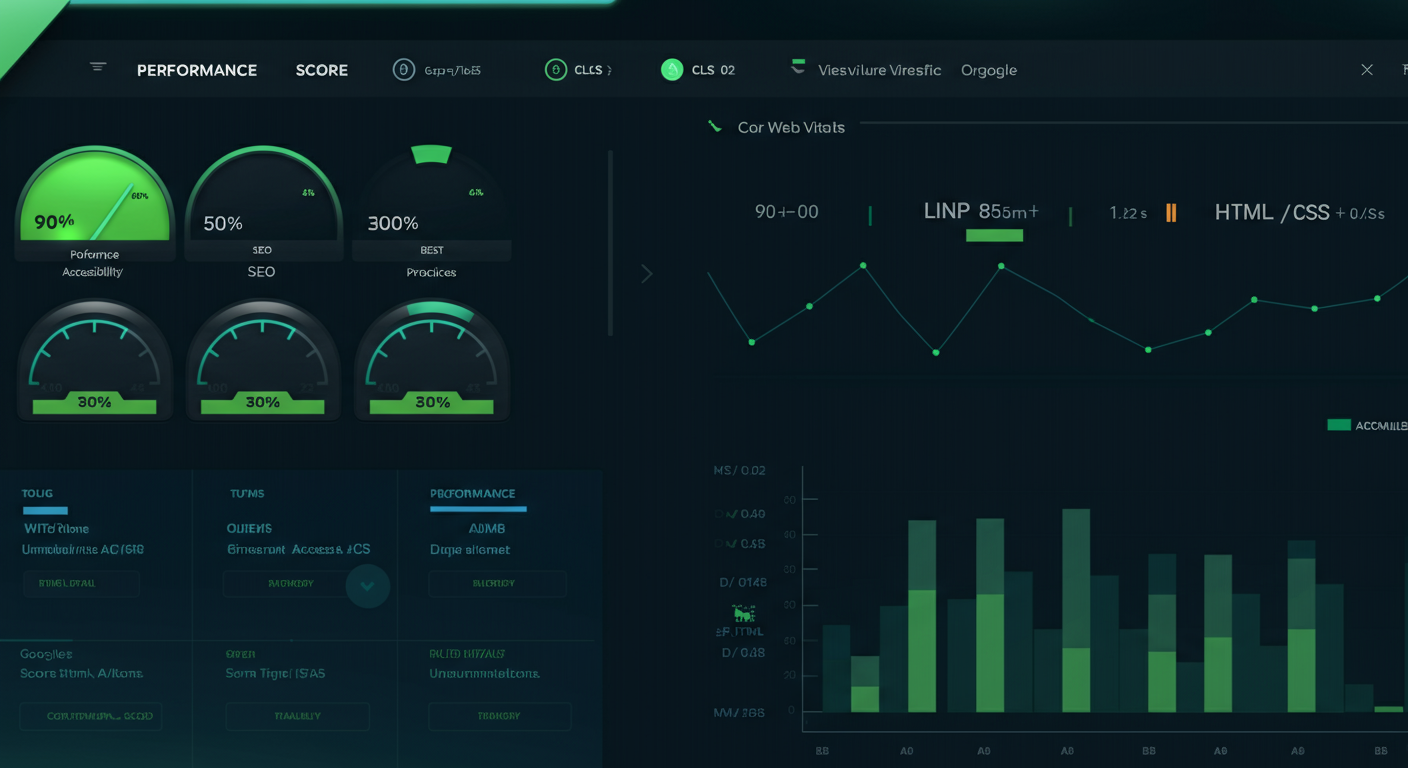
Core Web Vitals — LCP (Largest Contentful Paint), FID (First Input Delay), and CLS (Cumulative Layout Shift) — are critical metrics Google uses to evaluate mobile user experience. On slow connections, an LCP above 4 seconds is common if the site is not optimised. Targeting an LCP below 2.5 seconds even on a 3G connection is the goal to achieve in order to perform in African SERPs.

Differences Between African Markets: Don't Treat Africa as a Single Block

One of the most common mistakes made by companies targeting Africa is treating the continent as a homogeneous market. In reality, Africa comprises 54 countries, hundreds of languages, and very different economic dynamics. Here are the key distinctions to know for your website creation strategy in Africa and your SEO approach.

Francophone vs Anglophone vs Lusophone Africa

Language is the primary segmentation factor. Francophone West and Central Africa (Senegal, Côte d'Ivoire, Cameroon, DRC) represents a market of over 300 million people who search in French. Anglophone Africa (Nigeria, Ghana, Kenya, South Africa) is the most competitive and digitally advanced market. Lusophone Africa (Angola, Mozambique) remains very underexploited in SEO.

Africa's Leading Digital Markets

Some African markets are significantly more mature than others in terms of SEO and e-commerce:

  • Nigeria: Africa's largest internet market with over 100 million users, highly competitive in Anglophone SEO.
  • Kenya: East Africa's technology hub, high mobile penetration rate, dynamic Anglophone market.
  • South Africa: the continent's most developed market, with SEO competition close to European standards.
  • Morocco and Egypt: fast-growing Arabic- and French-speaking markets with a structured digital economy.
  • Senegal and Côte d'Ivoire: booming Francophone markets, still low in SEO saturation, ideal for rapid positioning.

Each market has its own search behaviours, specific keywords, and levels of competition. An effective SEO strategy must be adapted country by country, or even city by city for major metropolitan areas.

Africa-Specific SEO Strategies: AMP, Lightweight Images, and Offline-Friendly Content

AMP (Accelerated Mobile Pages): Still Relevant in Africa

Although Google removed AMP as a direct ranking criterion for Top Stories in 2021, the technology remains extremely relevant for African markets. AMP pages load up to 4 times faster than standard pages on slow connections, which directly improves user experience and reduces bounce rate. For news sites, blogs, and e-commerce platforms targeting sub-Saharan Africa, implementing AMP remains a sound strategic decision.

Image Optimisation: The Key to Performance

Images often account for 60 to 80% of a web page's total weight. On limited African connections, an unoptimised image can ruin the user experience and your SEO ranking. Here are the essential best practices:

  • Use WebP or AVIF format instead of JPEG or PNG (30 to 50% size reduction).
  • Implement lazy loading to only load images when they enter the viewport.
  • Use responsive images with the srcset attribute to serve the right size based on the screen.
  • Compress all images below 100 KB for content images, 200 KB maximum for hero images.
  • Deploy a CDN with nodes in Africa (Cloudflare, Fastly, AWS CloudFront with African regions).

Offline-Friendly Content and Progressive Web Apps (PWA)

Offline-friendly content is an approach that allows users to access your content even when the connection is unstable or unavailable. Progressive Web Apps (PWAs) use Service Workers to cache content and make it available offline. This technology is particularly well-suited to Africa, where network outages are frequent.

Google favours PWAs in its search results because they offer a better user experience. Companies such as Jumia, Konga, and several African media outlets have adopted PWAs with spectacular results: a 40% reduction in bounce rate, a 60% increase in time spent on site, and a significant improvement in conversions.

Local Hosting and Geographic Signals

To target a specific African market, local or regional hosting sends positive signals to Google. Using a local domain name (.sn for Senegal, .ci for Côte d'Ivoire, .cm for Cameroon, .ng for Nigeria) reinforces the geographic relevance of your site. If you use a .com domain, configure geographic targeting in Google Search Console to indicate to Google which country you are primarily targeting.

Positioning Opportunities in Low-Competition African Markets

One of the major advantages of Google SEO in Africa is the low competition on many high-potential commercial keywords. Where a keyword like "SEO agency Paris" is contested by hundreds of sites with years of authority, "SEO agency Dakar" or "website creation Abidjan" can be conquered within a few months with a well-executed strategy.

Identifying Low-Competition Niches

To identify positioning opportunities, use tools such as Google Keyword Planner, Semrush, or Ahrefs filtered by African country. You will often discover keywords with significant search volume (500 to 5,000 searches/month) and a difficulty of 0 to 20 out of 100, which is extremely accessible. These opportunities exist in sectors such as:

  • Local B2B services (accounting, legal, logistics, real estate).
  • Health and wellness (clinics, pharmacies, traditional medicine).
  • Online education and professional training.
  • Tourism and local hospitality.
  • Agriculture and agro-industry.

The Local Content Strategy: Speaking Your Audience's Language

Localised content is a powerful SEO lever in Africa. This does not simply mean translating your content, but adapting it to local cultural, economic, and linguistic realities. Using local expressions, concrete examples drawn from the African context, and references to local events or personalities strengthens the relevance of your content in the eyes of Google and your readers.

Local SEO (Google Business Profile, local citations, customer reviews) is also underexploited in Africa. Creating and optimising your Google Business Profile listing for each city where you operate can place you at the top of local results with minimal effort compared to European markets.

Generative AI and the Search Generative Experience (SGE) in Africa

Google is progressively rolling out its Search Generative Experience (SGE) worldwide, including in Africa. This major evolution means that search results now integrate AI-generated answers at the top of the page, before standard organic results. For African SEOs, this means creating structured, factual, and authoritative content that can be cited by Google's AI. Structured data (Schema.org) becomes even more important for appearing in these new formats.

Voice Search in African Languages

Voice search is experiencing explosive growth in Africa, driven by the massive adoption of smartphones and improvements in voice recognition for African languages. Google is continuously improving its understanding of Swahili, Hausa, Yoruba, Wolof, and other major African languages. In 2026, optimising for voice search by integrating natural question-and-answer formats into your content becomes a strategic priority.

The Rise of E-Commerce and Transactional SEO

African e-commerce is expected to reach $75 billion in 2026. This growth creates massive demand for transactional SEO: optimisation of product pages, category pages, customer reviews, and price comparison tools. Companies that invest now in their African e-commerce SEO will gain a considerable head start over their competitors.

Structured Data and the African Knowledge Graph

Google is progressively enriching its Knowledge Graph with African entities: businesses, personalities, places, and events. Implementing Schema.org structured data (LocalBusiness, Organization, Article, Product, FAQ) allows your site to be better understood by Google and to appear in rich snippets. In Africa, where few sites still use structured data, this is an immediate competitive advantage.

Building a Sustainable African SEO Strategy

Google SEO in Africa is a discipline that rewards those who understand local specificities and adapt their approach accordingly. Loading speed, mobile optimisation, localised content, low-competition keywords, and structured data are the pillars of a high-performing African SEO strategy. To go further, consult our Africa SEO pillar guide which covers all the strategies to dominate search results across the continent.

At BEONWEB, we support African and international businesses in their website creation strategy in Africa and their Google SEO in Africa. Our local expertise combined with our proven SEO methods allows you to position yourself quickly in the most promising African markets. Contact us for a free SEO audit of your digital presence in Africa.

Editorial desk & expertise

BEONWEB Editorial Team

Our team combines SEO strategists, web developers, designers and digital marketers — all working daily on real client projects across Cameroon and Francophone Africa.

SCIDIE Award 2026 — Best web agency in Cameroon8+ years of field experience150+ projects delivered

Your project

Ready to transform your digital presence?

BEONWEB guides you from strategy to launch — website, SEO, webmarketing.