Across Africa, digital competition intensifies every year. Thousands of websites compete for the top positions on Google, but only those that master technical SEO manage to establish themselves durably. Unlike content SEO or link building, technical SEO works behind the scenes: it ensures that search engines can crawl, understand, and index your site optimally.
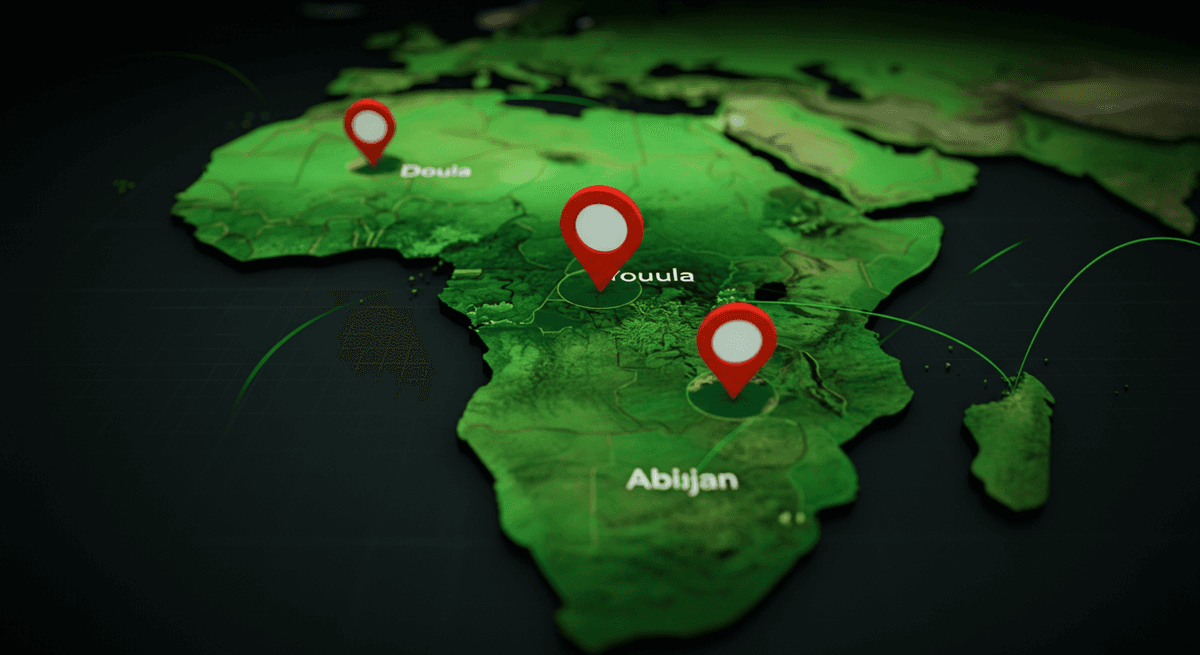
In this comprehensive guide, we will break down the fundamentals of technical SEO and show you how to apply them concretely to dominate Google search results, whether you are based in Dakar, Abidjan, Casablanca, Lagos, or Nairobi.
What is Technical SEO?
Technical SEO encompasses all the optimizations made to a website's infrastructure to improve its crawling, indexing, and ranking in search engines. It is not about the content you publish, but about how your site is built, structured, and served to Google's bots.
The three pillars of technical SEO are:
- Accessibility: is your site easily crawlable by Googlebot?
- Indexability: are your pages correctly indexed in Search Console?
- Performance: does your site load quickly, even on African 3G connections?
1. Loading Speed: A Critical Factor in Africa
Loading speed has been one of Google's most important ranking factors since 2010, and even more so since the Page Experience Update in 2021. In Africa, where a large portion of users browse on 3G or 4G mobile networks with high latency, your site's performance can make the difference between a converted visitor and a catastrophic bounce rate.
How to Measure Your Site's Speed?
Several free tools allow you to analyze your site's performance:
- Google PageSpeed Insights: analyzes mobile and desktop performance with precise recommendations.
- GTmetrix: provides a detailed report on blocking resources and optimization opportunities.
- WebPageTest: allows you to simulate loading from different locations, including African ones.
Essential Optimizations to Speed Up Your Site
- Compress images: use modern formats like WebP or AVIF, and reduce image weight without visible quality loss.
- Enable browser caching: configure Cache-Control headers so static resources are stored locally.
- Minify CSS, JavaScript and HTML: remove unnecessary spaces, comments and characters from your code.
- Use a CDN (Content Delivery Network): distribute your resources from servers close to your African users.
- Enable GZIP or Brotli compression: reduce the size of files transferred between the server and browser.
2. Core Web Vitals: Google's Key Metrics
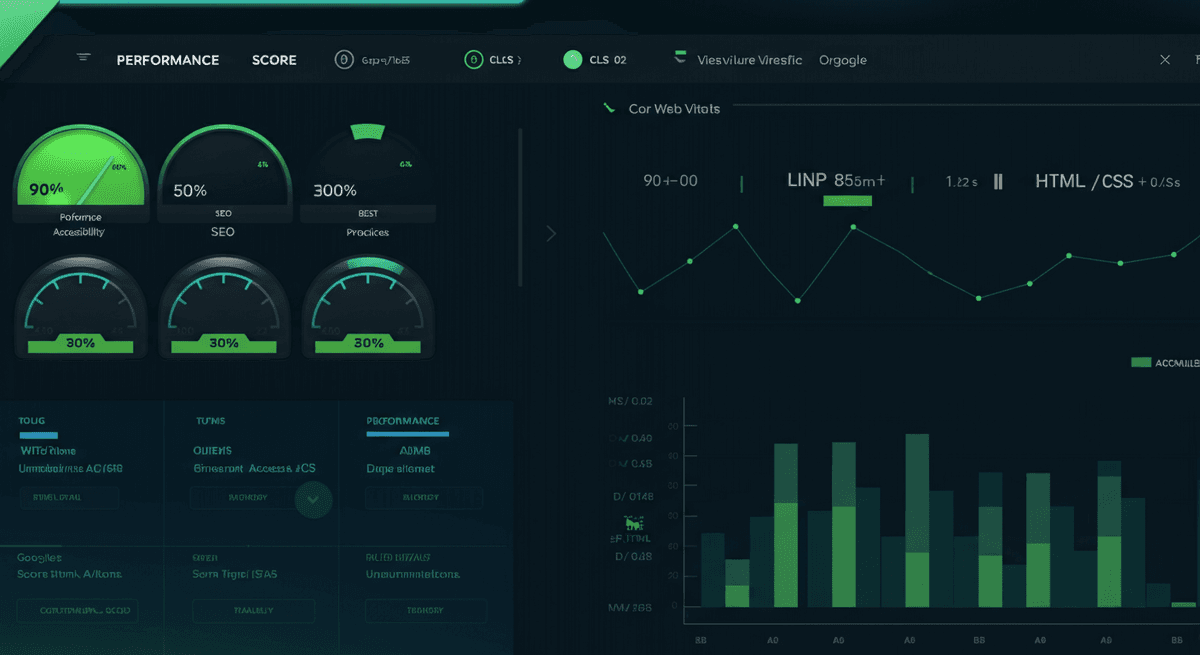
Since May 2021, Core Web Vitals have officially been Google ranking factors. These three metrics measure the real user experience on your site and are directly linked to your positioning in search results.
LCP – Largest Contentful Paint
LCP measures the time needed to display the largest visible element on the page (hero image, main text block). A good LCP must be under 2.5 seconds. To improve it: preload your critical images with the fetchpriority="high" attribute, optimize your server and reduce TTFB (Time To First Byte).
INP – Interaction to Next Paint
INP (which replaced FID in March 2024) measures the overall responsiveness of your page to user interactions. A good INP score is under 200ms. Reduce long JavaScript tasks, use web workers for intensive computations, and optimize your event handlers.
CLS – Cumulative Layout Shift
CLS measures the visual stability of your page. A CLS score below 0.1 is considered good. To improve it: always define width and height dimensions for your images and videos, avoid injecting content above existing content, and use system fonts or preload your web fonts.
3. URL Structure: Clarity and Hierarchy
A well-structured URL is readable by both humans AND search engines. It should reflect your site's architecture and contain the main keywords of the page. In French-speaking Africa, consider including geolocated terms to target local queries.
Best Practices for Your URLs
- Use hyphens (-) to separate words, never underscores (_) or spaces.
- Keep your URLs short and descriptive: /services/technical-seo-dakar is better than /page?id=1234.
- Avoid unnecessary dynamic parameters that create duplicate content.
- Use lowercase URLs only and avoid special characters.
- Set up 301 redirects for all modified old URLs.
4. Schema.org Markup: Speak Google's Language
Schema.org markup (or structured data) allows search engines to precisely understand the content of your pages. By implementing the right schemas, you can obtain rich snippets in Google results: review stars, prices, FAQs, events, recipes, etc. These enhancements significantly increase your click-through rate (CTR).
The Most Useful Schemas for African Websites
- LocalBusiness: essential for local businesses in Dakar, Abidjan, Casablanca, etc.
- Article / BlogPosting: for your blog articles and news.
- FAQPage: to display your Q&As directly in the SERPs.
- Product: for e-commerce stores with price and availability.
- BreadcrumbList: to display breadcrumb navigation in search results.
Use JSON-LD format (recommended by Google) to implement your structured data in the <head> tag of your pages. Then validate your implementation with Google's Rich Results Test.
5. Mobile Optimization: Mobile-First Indexing
In Africa, more than 80% of web traffic comes from mobile devices. Google adopted Mobile-First Indexing since 2019, meaning the mobile version of your site is used for indexing and ranking. If your site is not optimized for mobile, you lose a massive share of visibility.
Mobile Optimization Checklist
- Responsive design: your site must automatically adapt to all screen sizes.
- Viewport tag: include <meta name="viewport" content="width=device-width, initial-scale=1"> in your <head>.
- Button and link size: minimum 48x48 pixels for comfortable touch navigation.
- Avoid intrusive pop-ups on mobile: Google has penalized them since 2017.
- Test regularly with Google Search Console's Mobile-Friendly Test tool.
6. Site Architecture and Internal Linking
A well-designed site architecture facilitates Googlebot crawling and efficiently distributes PageRank between your pages. The 3-click rule states that any important page on your site should be accessible within 3 clicks from the homepage.
Strategic internal linking consists of creating links between your pages to guide bots and users toward your most important content. Use descriptive link anchors containing your target keywords, and avoid generic anchors like "click here" or "learn more".
7. Robots.txt File and XML Sitemap
The robots.txt file tells search engine bots which parts of your site they can or cannot crawl. A misconfigured robots.txt can block the indexing of important pages. Regularly check your robots.txt file in Google Search Console.
The XML sitemap is a map of your site that helps Google discover and index all your pages. Submit your sitemap in Google Search Console and update it automatically with each new publication. For multilingual sites, use sitemaps with hreflang tags to indicate the language versions of each page.
8. HTTPS and Security: An Absolute Prerequisite
Since 2014, Google has used HTTPS as a ranking signal. An unsecured site (HTTP) is penalized in search results and displays a "Not Secure" warning in Chrome, which destroys user trust. Install an SSL/TLS certificate (free with Let's Encrypt) and configure 301 redirects from HTTP to HTTPS.
Conclusion: Technical SEO, a Profitable Investment
Technical SEO is the foundation on which every effective organic search strategy rests. Without solid technical foundations, even the best content and backlinks will not be enough to propel you to the top of Google. In Africa, where digital competition is still less mature than in Europe or North America, mastering these technical basics gives you a considerable competitive advantage.
Start with a comprehensive technical SEO audit of your site, identify priority blocking points, and fix them methodically. At BEONWEB, we support African businesses in technically optimizing their online presence for lasting and measurable results.
Editorial desk & expertise
Our team combines SEO strategists, web developers, designers and digital marketers — all working daily on real client projects across Cameroon and Francophone Africa.