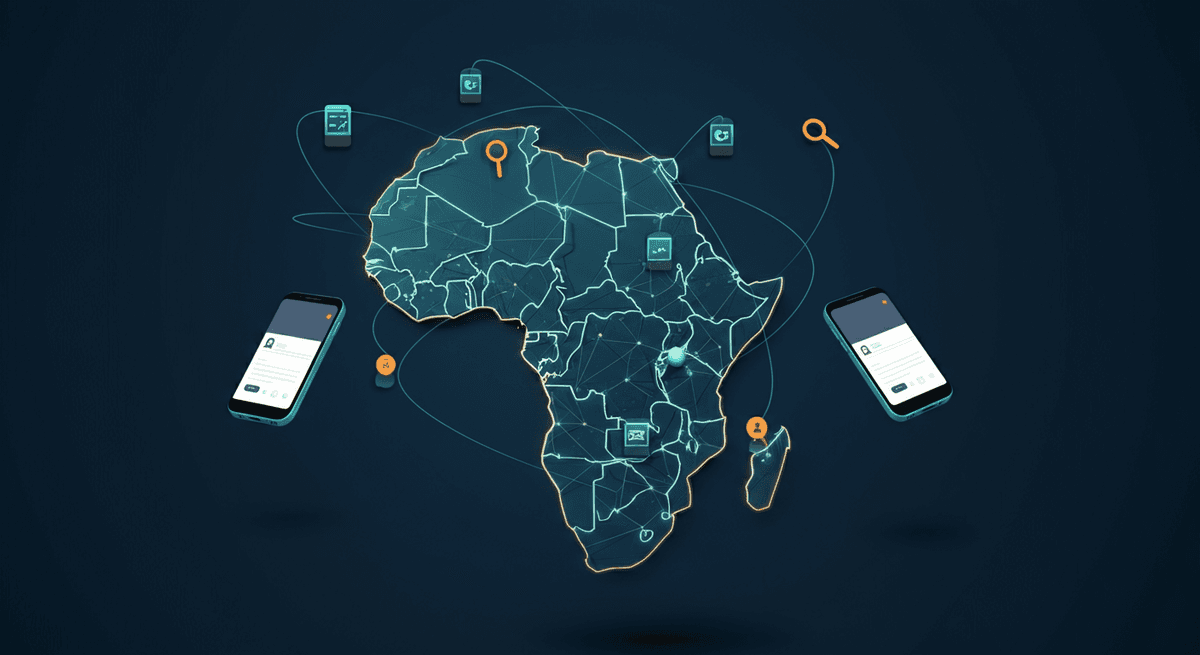
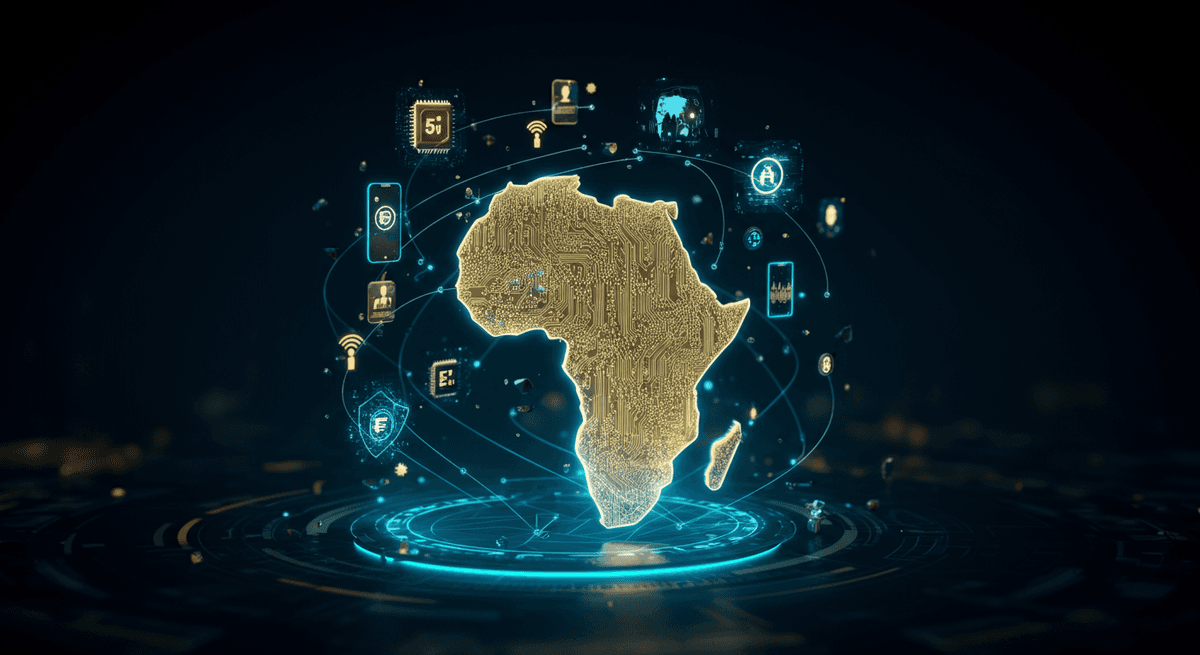
Africa is entering a new era. By 2027, the African continent will no longer be simply an emerging market — it will be one of the engines of global digital innovation. With over 1.5 billion inhabitants, an ultra-connected young population, and lightning-fast technology adoption, Africa is poised for an unprecedented digital revolution. Here are the 10 digital trends that will change everything.
1. Artificial Intelligence Serving African Development
AI is no longer reserved for Western tech giants. In 2027, African startups are using AI models trained on local data to solve continent-specific problems: medical diagnosis in rural areas, agricultural crop forecasting, financial fraud detection, and personalization of mobile banking services.
Hubs like Lagos, Nairobi, Kigali, and Cairo concentrate hundreds of AI startups that export their solutions globally. Conversational AI in local languages (Swahili, Hausa, Amharic, Wolof) democratizes access to digital services for millions of non-English speakers.
2. 5G: The Infrastructure That Changes Everything
The massive deployment of 5G across Africa in 2027 is radically transforming digital usage. Unlike developed countries where 5G was layered on top of an already dense 4G infrastructure, Africa benefits from a unique advantage: it can deploy 5G directly in areas that never had reliable wired connections.
This ultra-fast connectivity paves the way for real-time telemedicine, immersive online education, smart factories, and connected cities. Countries like Rwanda, Kenya, and South Africa are leading the deployment, with speeds reaching 1 Gbps in urban areas.
3. Fintech: Africa, the Global Laboratory of Digital Finance
Africa is already the global leader in mobile money with M-Pesa, Wave, and Orange Money. In 2027, African fintech takes a new step: financial super-apps integrate payments, savings, credit, insurance, and investment in a single interface. Cryptocurrencies and stablecoins pegged to African currencies facilitate cross-border transfers at near-zero cost.
The African fintech market exceeds $65 billion in 2027, attracting massive investments from American, European, and Asian funds. Traditional banks are partnering with fintechs or disappearing, unable to compete with the agility and accessibility of mobile solutions.
4. Voice Commerce: Shopping with Your Voice in Local Languages
Voice commerce is exploding in Africa thanks to the combination of 5G, AI, and multilingual voice assistants. In 2027, millions of African consumers place their orders in Swahili, Yoruba, or dialectal Arabic, without ever having to type a single word. This user interface revolution removes the barrier of digital literacy.
Platforms like Jumia, Kilimall, and new local players integrate voice search engines and AI shopping assistants capable of understanding regional accents and local idiomatic expressions. The conversion rate of voice commerce exceeds that of classic mobile commerce by 40%.
5. Augmented and Virtual Reality: New Experience Spaces
AR/VR is no longer a gadget reserved for Western markets. In 2027, augmented reality applications are transforming education, retail, real estate, and tourism in Africa. Students in Senegal virtually visit Parisian museums; shoppers in Nigeria try on clothes in AR before ordering; architects in Ghana present real estate projects in VR.
The cost of VR headsets has dropped by 80% since 2023, making the technology accessible to Africa's rapidly expanding middle classes. Companies integrating AR into their customer experience record a 55% increase in engagement and a 30% reduction in product returns.
6. AgriTech: Feeding Africa Through Digital Innovation
Agriculture still accounts for 60% of employment in sub-Saharan Africa. In 2027, AgriTech is revolutionizing this sector with crop surveillance drones, IoT sensors for smart irrigation, platforms connecting farmers directly with buyers, and AI tools for weather forecasting and risk management.
Startups like Twiga Foods, Apollo Agriculture, and Farmerline have raised hundreds of millions of dollars to digitize the African agricultural value chain. The result: an average 35% increase in income for connected farmers and a significant reduction in post-harvest losses.
7. EdTech: Democratizing Quality Education
With 600 million young Africans of school age by 2030, EdTech represents one of the continent's most promising markets. In 2027, adaptive learning platforms use AI to personalize educational pathways, identify gaps, and offer content in local languages.
Internationally recognized digital certifications allow young Africans to access the global job market without leaving their country. The hybrid model (in-person + digital) is establishing itself as the norm, combining the best of both worlds to maximize learning outcomes.
8. HealthTech: Revolutionizing Healthcare Through Mobile
Africa suffers from a chronic shortage of doctors: 0.2 doctors per 1,000 inhabitants on average, compared to 3.5 in Europe. In 2027, HealthTech partially bridges this gap with AI telemedicine, smartphone diagnostics, drone drug delivery, and blockchain medical records.
Apps like mPharma, Helium Health, and Vezeeta are transforming healthcare access for millions of Africans. AI diagnostics achieve accuracy rates comparable to specialist physicians for certain conditions, including malaria, tuberculosis, and eye diseases.
9. The Creator Economy: African Content Conquers the World
Afrobeats, Nollywood, African fashion, and continental influencers have conquered global algorithms. In 2027, the African creator economy generates over $20 billion, driven by TikTok, YouTube, Instagram, and African platforms like Audiomack and Boomplay.
Content monetization tools (NFTs, subscriptions, super chats, digital merchandising) allow African creators to live from their passion without depending on Western brands. A new class of creator-entrepreneurs is emerging, combining cultural creativity with mastery of digital tools.
10. The African Smart City: Intelligent Cities Designed for Africa
Kigali, Konza (Kenya), Diamniadio (Senegal), Eko Atlantic (Nigeria): African smart cities don't copy Western models — they reinvent them. In 2027, these smart cities integrate solar energy management systems, autonomous transport, digital public services, and IoT sensor networks to optimize urban quality of life.
These projects attract massive investments from China, the UAE, the European Union, and the United States, making Africa a global laboratory for 21st-century intelligent urbanism.
How to Benefit from These Trends Right Now?
These 10 trends are not mere predictions — they are already underway. For businesses, entrepreneurs, and African professionals, the window of opportunity is open. Here's how to capitalize on them:
- Invest in digital training for your teams starting today
- Adopt a mobile-first and voice-first strategy for your online presence
- Explore partnerships with local startups in your sector
- Integrate AI into your business processes to gain efficiency and competitiveness
- Build a multilingual digital presence to reach all African communities
Africa in 2027 will be digital, innovative, and connected. The players who position themselves today will be the leaders of tomorrow. BEONWEB supports you in this digital transformation with strategies adapted to the realities and opportunities of the African market.
Editorial desk & expertise
Our team combines SEO strategists, web developers, designers and digital marketers — all working daily on real client projects across Cameroon and Francophone Africa.